
In modern research labs, glove boxes are indispensable for handling air-sensitive materials, conducting inert-atmosphere experiments, and ensuring precise contamination control. When selecting a glove box, one critical decision stands out: single-station vs. multi-station layouts. The right choice directly impacts workflow efficiency, team collaboration, operational costs, and space utilization. This guide breaks down the core differences, pros and cons, and ideal use cases for each layout to help you optimize your lab’s productivity.
What Is a Single-Station Glove Box?
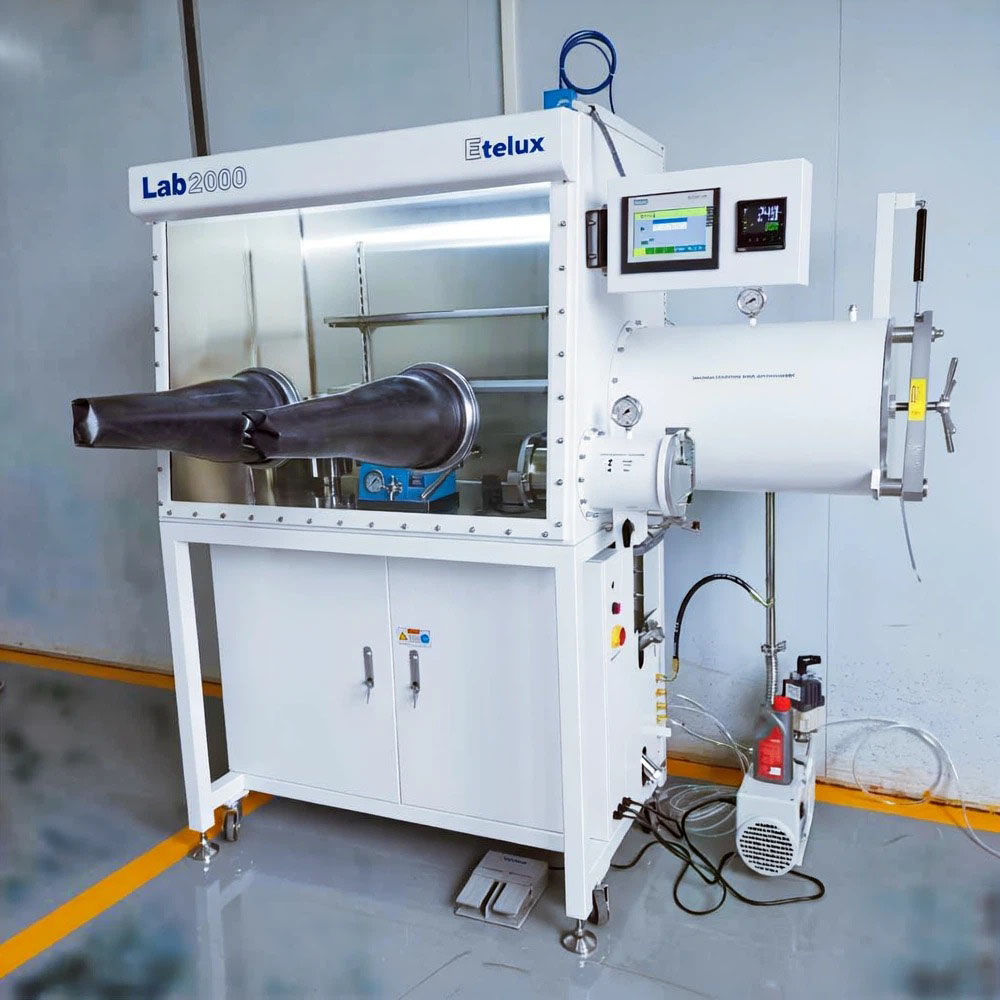
A single-station glove box is a compact, sealed enclosure designed for one operator at a time. It typically features a single access panel with one pair of gloves, a small antechamber for sample transfer, and a streamlined internal workspace.
Core Characteristics
- Dimensions: Standard lengths of 900–1200 mm, with an operation width of 600–800 mm.
- Capacity: Accommodates 1–2 small devices (e.g., spin coaters, hot plates, or precision balances).
- Atmosphere Control: Maintains ultra-low O₂/H₂O levels (≤1 ppm) with a compact gas purification system.
Pros of Single-Station Glove Boxes
- Cost-Effective: Lower upfront investment and reduced long-term operational costs. The small chamber volume minimizes inert gas (N₂/Ar) consumption and eases the load on purification columns.
- Space-Saving: Ideal for small labs or bench-limited environments, as it occupies minimal floor/bench space.
- Low Maintenance: Fewer components mean simpler upkeep, faster system recovery after transfers, and lower risk of seal leaks.
- Focused Operation: Eliminates workspace congestion, allowing uninterrupted, precise work for individual researchers.
Cons of Single-Station Glove Boxes
- No Collaboration: Only one user can operate at a time, creating bottlenecks in team-based projects.
- Limited Scalability: Cannot accommodate large equipment or parallel processing of multiple samples.
- Workflow Constraints: Unsuitable for multi-step experiments requiring handoffs or simultaneous tasks.
Ideal Use Cases
- Small-scale research: Academic labs, start-ups, or individual researcher workstations.
- Simple, repetitive tasks: Battery coin cell assembly, material synthesis, or sample encapsulation.
- Budget/space-constrained labs: Facilities with limited funding or bench space.
- Low-frequency operations: Infrequent use of inert environments for small-batch experiments.
What Is a Multi-Station Glove Box?
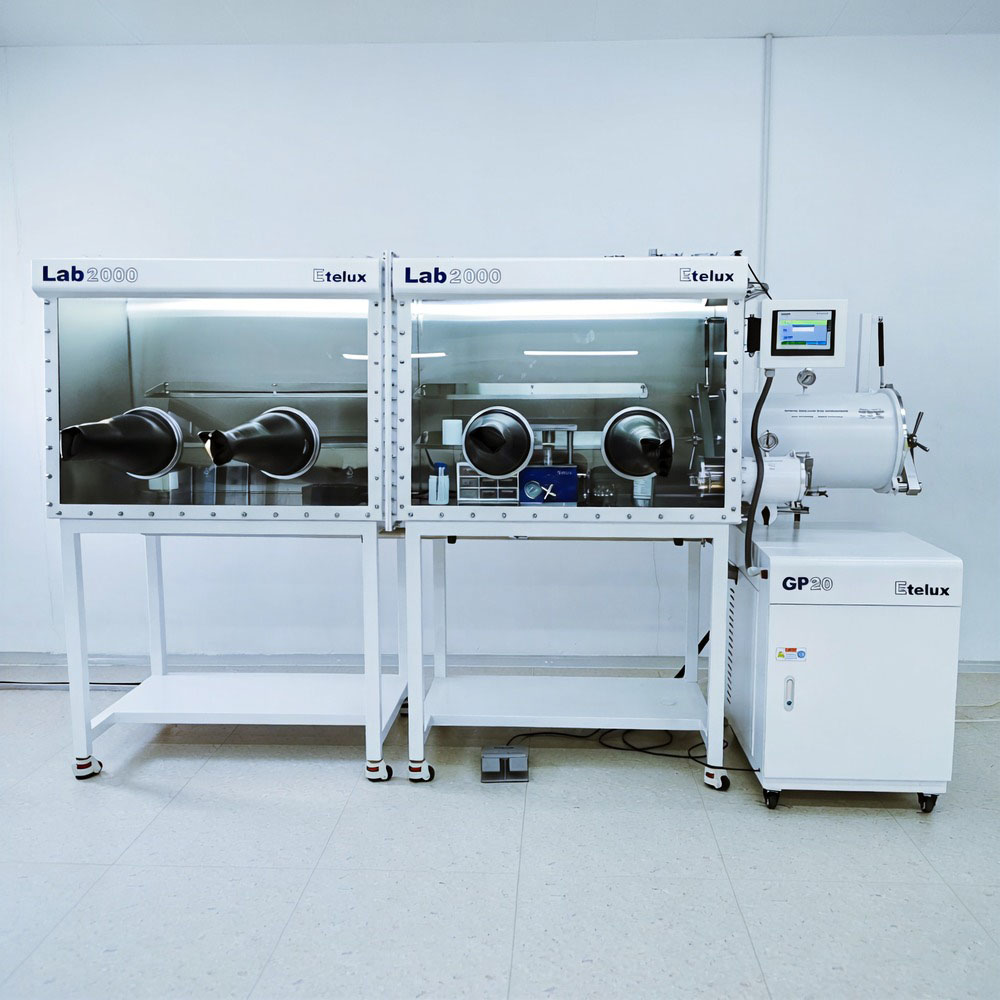
A multi-station glove box (including double-station and larger configurations) is an expanded enclosure built for two or more operators to work simultaneously. It features multiple glove ports (single-sided or double-sided), a spacious internal chamber, and often modular work zones.
Core Characteristics
- Dimensions: Double-station models range 1500–1800 mm in length; larger multi-station units exceed 2000 mm.
- Capacity: Houses 2–4+ devices, with dedicated zones for synthesis, assembly, and testing.
- Design Variants:
- Single-sided multi-station: All glove ports on one panel; operators work side-by-side.
- Double-sided multi-station: Glove ports on front/back panels; operators face each other for seamless collaboration.
Pros of Multi-Station Glove Boxes
- Enhanced Productivity: Parallel operations by multiple users cut bottlenecks and accelerate project timelines.
- Seamless Collaboration: Double-sided layouts enable real-time communication, sample handoffs, and synchronized tasks—critical for complex experiments.
- High Scalability: Accommodates large equipment, multi-step workflows, and batch processing (e.g., battery prototyping, semiconductor fabrication).
- Workflow Segmentation: Divide the chamber into functional zones (e.g., one side for material preparation, the other for assembly) to optimize process flow.
Cons of Multi-Station Glove Boxes
- Higher Costs: Larger upfront price, increased inert gas consumption, and higher maintenance (more seals, gloves, and purification load).
- Space-Intensive: Requires significant floor/bench space, challenging for small labs.
- Complex Maintenance: More components mean longer recovery time after transfers and higher leak risk.
Ideal Use Cases
- Team-based research: Academic groups, industrial R&D labs, or collaborative projects.
- Complex workflows: Multi-step experiments (e.g., organometallic chemistry, perovskite device fabrication) requiring real-time collaboration.
- Pilot-scale production: Small-batch manufacturing of air-sensitive components (e.g., lithium-ion battery assembly).
- High-throughput labs: Facilities processing multiple samples daily or running parallel experiments.
Head-to-Head Comparison: Single-Station vs. Multi-Station
| Feature | Single-Station Glove Box | Multi-Station Glove Box |
|---|---|---|
| Operators | 1 at a time | 2+ simultaneously |
| Size (Length) | 900–1200 mm | 1500+ mm |
| Gas Consumption | Low (small volume) | High (large volume) |
| Upfront Cost | Lower | Higher |
| Collaboration | None | Excellent (double-sided) |
| Scalability | Limited | High |
| Best For | Individual work, small labs | Teamwork, complex workflows |
How to Choose the Right Layout for Your Lab
- Assess Team Size & Workflow:
- 1–2 researchers, independent tasks: Choose a single-station model.
- 3+ researchers, collaborative projects: Opt for a double-sided multi-station unit.
- Evaluate Experiment Complexity:
- Simple, single-step tasks: Single-station suffices.
- Multi-step, handoff-dependent workflows: Multi-station is critical.
- Consider Space & Budget:
- Limited space/funding: Single-station balances performance and cost.
- Ample space, long-term investment: Multi-station maximizes productivity over time.
- Plan for Future Growth: If your lab may expand or scale up experiments, a multi-station layout avoids costly upgrades later.
Conclusion
There is no “one-size-fits-all” glove box layout. Single-station glove boxes excel in compact, cost-sensitive environments with individual or low-collaboration work, offering efficiency through simplicity. Multi-station glove boxes shine in team-driven, complex workflows, boosting productivity via parallel work and seamless collaboration.
By aligning your choice with your lab’s team size, experiment needs, space, and budget, you can select the ideal layout to maximize efficiency, streamline workflows, and support high-quality research.