
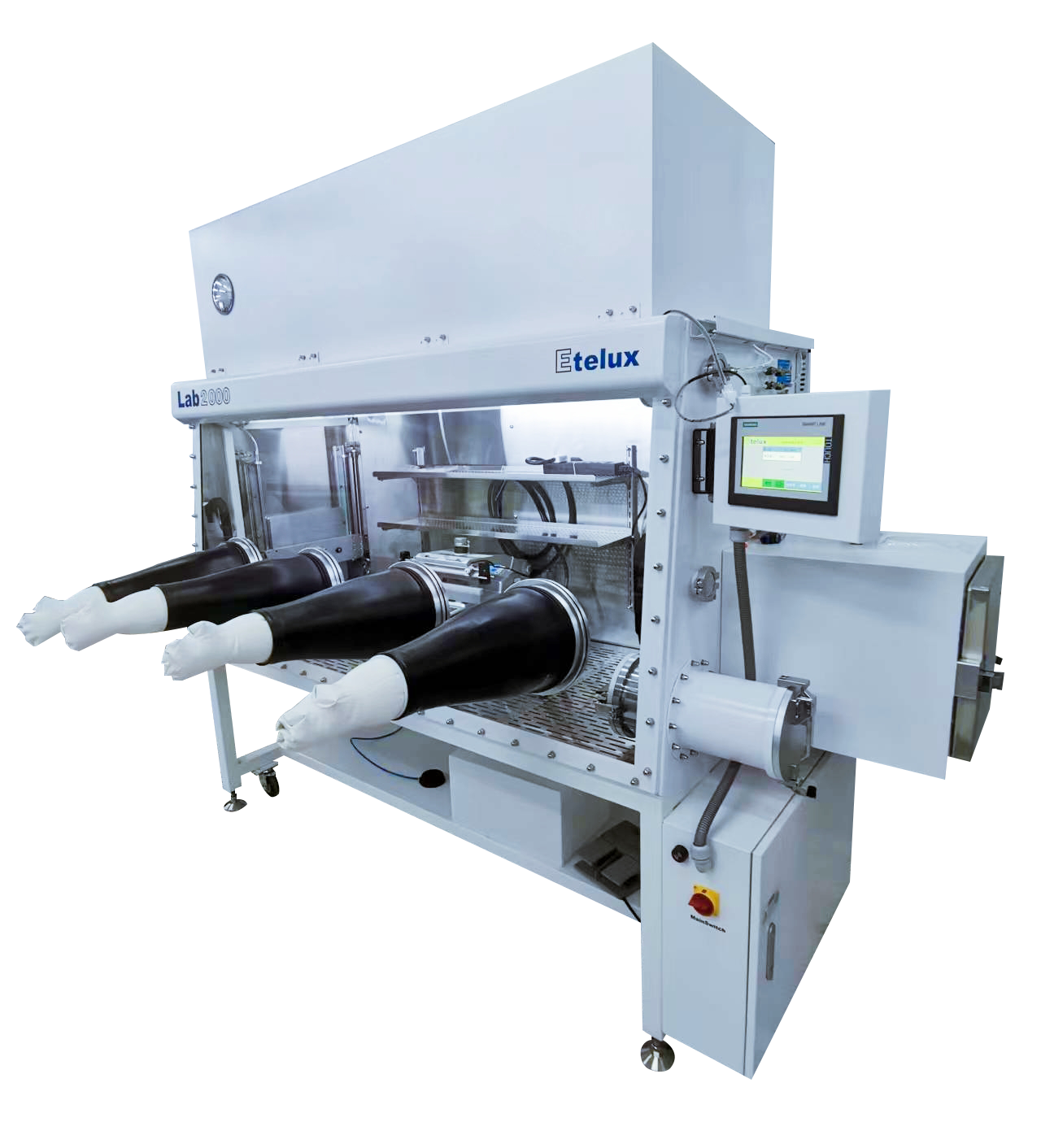
In precision manufacturing workflows such as vacuum coating, optical thin-film deposition, and semiconductor functional film fabrication, process engineers and procurement teams typically prioritize core compliance parameters when selecting vacuum glove boxes. These key indicators include oxygen and moisture content, system leak rate, material grade, and ESD performance. While these specs guarantee baseline coating yield and cleanroom compliance, they only define process quality rather than mass production efficiency.
In actual continuous mass production environments, antechamber dimensions and pumping speed are the most underrated factors that restrict production tact time and overall equipment utilization rate. Many manufacturing facilities face a common dilemma: their glove boxes meet standard vacuum and purity specifications with stable yield, yet the overall production capacity fails to reach expectations. The bottleneck rarely lies in the vacuum coating machine itself, but in inefficient material transfer cycles caused by improperly configured glove box antechambers.
For automated vacuum coating production lines, a vacuum glove box functions far beyond a simple process isolation device. It acts as the core transfer hub for material circulation and process continuity. The antechamber volume, vacuum pumping speed, and gas exchange efficiency directly determine single-batch transfer duration, hourly output capacity, and long-term production costs. This article elaborates on the selection principles of these two hidden efficiency-oriented parameters, providing actionable guidelines for process optimization and industrial procurement decisions.
Common Industry Selection Mistake: Prioritizing Static Process Specs Over Dynamic Throughput Efficiency
Most glove box procurement evaluations overemphasize static main-chamber performance, including steady-state O₂/H₂O content below 0.1 ppm, ultra-low system leak rate, 316L stainless steel construction, and cleanroom compatibility. These parameters secure the bottom limit of process quality but cannot lift the upper limit of mass production throughput.
Most standard industrial glove boxes deliver qualified purification, sealing, and anti-static performance for laboratory R&D and intermittent sampling. However, their compact antechambers and conventional pumping systems are not designed for high-frequency continuous production. In full-scale manufacturing, frequent material loading and unloading trigger repeated pumping delays and incomplete gas replacement, severely limiting production tact time and dragging down line efficiency.
Unlike lab-based intermittent operation, industrial vacuum coating requires continuous, stable, low-latency material circulation. While the main chamber maintains a stable ultra-clean process atmosphere, the antechamber governs all material exchange workflows. Mismatched antechamber and pumping configurations create a typical production bottleneck: advanced coating equipment sits idle, waiting for slow glove box material turnover.
Antechamber Size: The Fundamental Hardware Determining Mass Throughput
The antechamber (transfer chamber) isolates external air, moisture, and contaminants while enabling safe internal and external transfer of substrates, jigs, and trays. To cut upfront costs, many buyers select compact standard antechambers, which sacrifice long-term production capacity for short-term budget savings.
Antechamber geometry and volume impact production efficiency in two critical ways:
1. Batch Loading Capacity Reduces Repetitive Transfer Latency
Small-volume standard antechambers only accommodate limited substrates or single sets of tooling, requiring dozens of repeated pumping and purging cycles per production shift. Each transfer cycle involves consistent vacuum evacuation, inert gas filling, and atmosphere replacement, generating substantial non-value-added downtime. Customized large-scale industrial antechambers support full-batch loading of substrates and complete production trays, drastically cutting transfer frequency and compressing single-batch cycle time for higher hourly throughput.
2. Optimized Chamber Volume Ensures Process Stability
Larger antechambers do not always equal higher efficiency. The core principle lies in volume matching with pumping systems, gas purification cycles, and main chamber atmosphere stability. An oversized antechamber paired with low pumping speed results in prolonged evacuation time; an undersized chamber cannot support high-volume mass production. Professional industrial selection requires customized antechamber dimensions based on actual substrate sizes, jig structures, and batch output requirements, achieving balanced performance for maximum loading capacity and minimum pumping duration.
Furthermore, reasonable antechamber design minimizes atmosphere fluctuation inside the main chamber. Frequent small-batch material transfer causes minor O₂/H₂O spikes and airflow turbulence, gradually undermining thin-film uniformity. Stable full-batch transfer maintains consistent internal process conditions, balancing high throughput and stable coating yield.
Vacuum Pumping Speed: The Dynamic Core of Production Tact Time Control
While antechamber size defines hardware throughput limits, pumping speed governs real-time production tact time. Pumping speed refers to the duration required to evacuate the antechamber from atmospheric pressure to target process vacuum. It determines the minimum interval of each material transfer cycle and serves as the most overlooked dynamic parameter in industrial glove box selection.
A widespread procurement pitfall is focusing solely on ultimate vacuum level rather than actual working pumping speed under production conditions. Even with identical ultimate vacuum specs, inconsistent pumping efficiency can lead to multi-fold differences in daily production output.
1. Pumping Speed Directly Determines Batch Cycle Duration
Continuous vacuum coating follows a fixed closed-loop workflow: finished product unloading → antechamber evacuation → inert gas purging → substrate loading → vacuum coating → next batch circulation. The coating process duration is fixed and non-compressible, making antechamber pumping and purging latency the only optimizable bottleneck. Higher pumping speed shortens material turnover intervals, increases batch frequency, and delivers sustainable production capacity growth without upgrading coating hosts.
2. Stable Pumping Performance Ensures Batch Consistency
Industrial-grade glove boxes feature uniform, controllable pumping speed and high-precision pressure sensing modules, enabling standardized repeatable vacuum evacuation and gas replacement. In contrast, generic glove boxes deliver unstable pumping performance, often resulting in incomplete evacuation and residual atmospheric contamination. This inconsistency causes batch-to-batch oxygen/moisture deviations, triggering common coating defects including color inconsistency, poor film adhesion, and pinhole formation.
3. Matched Pumping Capacity Eliminates Energy Waste & Mechanical Wear
Mismatched configurations cause unnecessary operational losses: high-power pumping units paired with small chambers lead to energy redundancy and excessive mechanical wear, while low-power pumps fitted on large antechambers result in prolonged evacuation, insufficient vacuum level, and incomplete gas purging. Industrial mass production demands precision matching between pump flow rate, power output, and antechamber volume, balancing rapid evacuation, stable operation, energy efficiency, and low maintenance costs for long-term 24/7 production.
Industrial-Grade Selection Criteria for Continuous Vacuum Coating Lines
Based on practical optical coating, semiconductor deposition, and functional thin-film production scenarios, here are field-verified selection standards for engineers and procurement decision-makers to balance quality, efficiency, and cost:
1. Customize antechamber size instead of adopting generic standard chambers: Configure chamber volume according to actual substrate dimensions, full-tray loading specs, and hourly output targets to enable one-time full-batch transfer and minimize repetitive operation latency.
2. Prioritize working pumping speed over ultimate vacuum parameters: Evaluate real evacuation time from atmospheric pressure to process vacuum under actual production loads, rather than relying solely on static ultimate vacuum data.
3. Equip dual-stage pumping and multi-cycle gas purging systems: Industrial production models require dual-stage vacuum evacuation plus 2–3 cycles of inert gas exchange to eliminate residual air contaminants, achieving both rapid turnover and ultra-low O₂/H₂O process requirements.
4. Adopt volume-speed balanced design: Avoid mismatched “large chamber + low pump power” or “small chamber + redundant pump power” configurations to optimize throughput stability, process consistency, and long-term operational costs for continuous mass production.
Procurement Conclusion: Standard Compliance Guarantees Quality, While Efficiency Matching Determines Profitability
In the homogenized vacuum glove box market, basic indicators such as leak rate, material grade, and gas purity have become standard industry configurations and can no longer create production advantages. The antechamber size and vacuum pumping speed are the core differentiated parameters that determine long-term line throughput, equipment utilization, and manufacturing costs.
Professional procurement decisions should transcend basic qualification compliance and focus on long-term production tact time optimization. A standard-compliant yet low-efficiency glove box acts as a hidden production bottleneck, causing sustained output loss, wasted labor hours, and delayed order delivery — costs that far exceed the initial equipment price difference.
The true value of industrial vacuum glove boxes lies not only in building an ultra-clean, low-oxygen, low-moisture process environment but in aligning material transfer efficiency with continuous production rhythms, maximizing vacuum coating host productivity and realizing long-term manufacturing cost reduction and efficiency improvement.