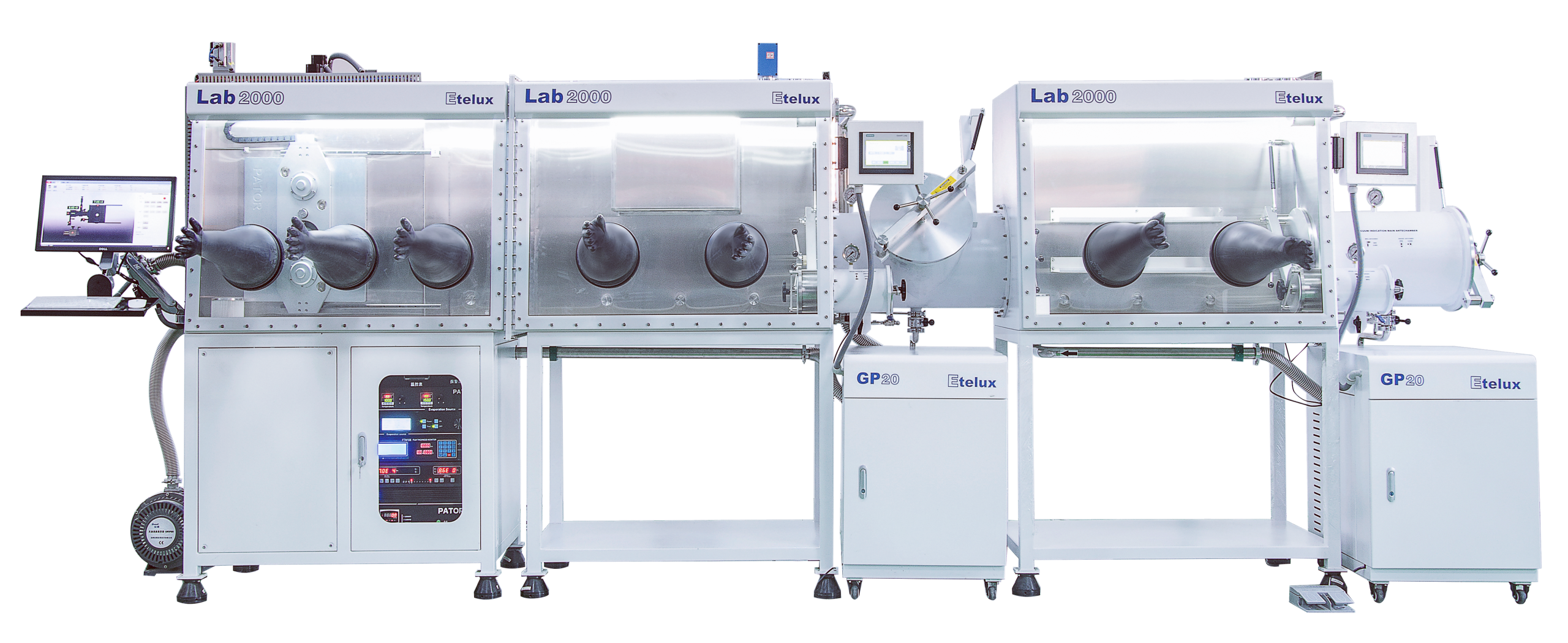
Perovskites, Quantum Dots, and 2D Materials: How Air-Sensitive Materials Achieve High-Performance Devices in Glove Box Vacuum Systems

Advanced functional materials have become the core driving force behind next-generation optoelectronic devices, quantum technology, and low-dimensional material research. However, most state-of-the-art materials including perovskites, quantum dots (QDs), and 2D quantum materials share a critical limitation: extreme air sensitivity. These high-value materials degrade rapidly when exposed to ambient moisture, oxygen, and airborne contaminants, leading to […]

From Evaporation to Encapsulation, Samples Never Leave Home: How Glove Box Evaporation Systems Are Reshaping Research Workflows

From Evaporation to Encapsulation, Samples Never Leave Home: How Glove Box Evaporation Systems Are Reshaping Research Workflows For academic and industrial labs focused on optoelectronic device development, process inconsistency has long been a major bottleneck for high-precision research. Air-sensitive functional materials, including perovskites and organic semiconductors, are extremely vulnerable to moisture and oxygen contamination. In […]

From OLED to Solar Cells: Why the Semiconductor Industry Can’t Do Without Vacuum Glove Boxes

Introduction In semiconductor research and advanced manufacturing, even trace amounts of moisture (H₂O) or oxygen (O₂)—often measured in parts per million (ppm) or even parts per billion (ppb)—can cripple device performance, ruin experimental reproducibility, and derail innovation. For lab scientists and engineers working on OLEDs, perovskite solar cells, and next-generation semiconductors, the vacuum glove box […]

Vacuum Glove Box vs. Purification Glove Box: Which One Do You Actually Need?

When working with moisture‑ and oxygen‑sensitive materials in labs—such as lithium‑ion batteries, perovskites, OLEDs, or anaerobic cultures—glove boxes are essential. But the biggest confusion for researchers is choosing between a vacuum glove box and a purification glove box. While both create inert environments, their working principles, capabilities, and ideal applications differ drastically. Let’s break down […]