
When working with moisture‑ and oxygen‑sensitive materials in labs—such as lithium‑ion batteries, perovskites, OLEDs, or anaerobic cultures—glove boxes are essential. But the biggest confusion for researchers is choosing between a vacuum glove box and a purification glove box. While both create inert environments, their working principles, capabilities, and ideal applications differ drastically. Let’s break down the key differences to help you decide.
What Is a Vacuum Glove Box?
A vacuum glove box uses evacuation and inert gas backfill to remove air from the chamber. It relies on repeated vacuum cycles (pumping out air, then refilling with nitrogen/argon) to lower oxygen and moisture levels temporarily.
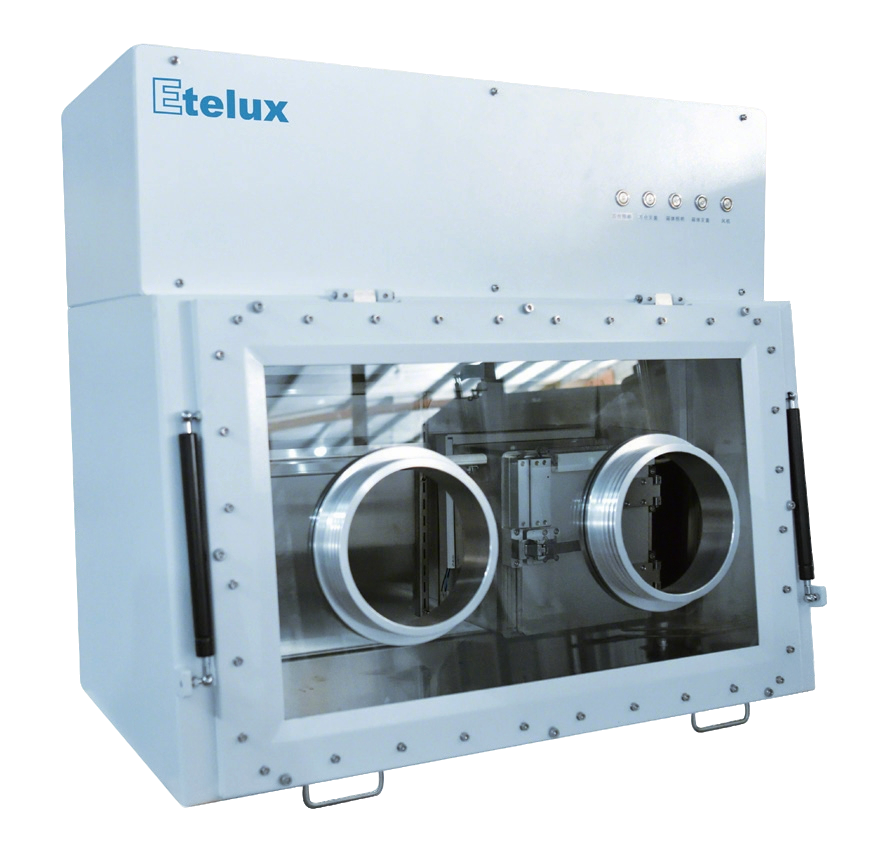
Core Features
- Working principle: “Displacement-focused” – removes air via vacuum, then refills with inert gas.
- Atmosphere control: Achieves low O₂/H₂O after cycles but lacks active maintenance; levels rise quickly when opening airlocks or handling outgassing materials.
- Vacuum capability: Chambers reach -0.08 ~ -0.1 MPa, ideal for vacuum transfers or degassing.
- Cost: Lower upfront cost; high long‑term gas consumption (each cycle uses inert gas).
Best For
- Occasional use: 1–3 times weekly, short sessions.
- Vacuum‑required tasks: Sample transfer between vacuum systems, degassing, or pre‑treatment for evaporation.
- Less stringent purity: O₂/H₂O < 100 ppm acceptable.
- Budget‑conscious labs: Basic inert environment needs.
What Is a Purification Glove Box?
A purification glove box (closed‑loop) has an integrated recirculating purification system. It continuously circulates internal atmosphere through molecular sieves and catalysts to adsorb moisture and oxygen, maintaining ultra‑low levels long‑term.
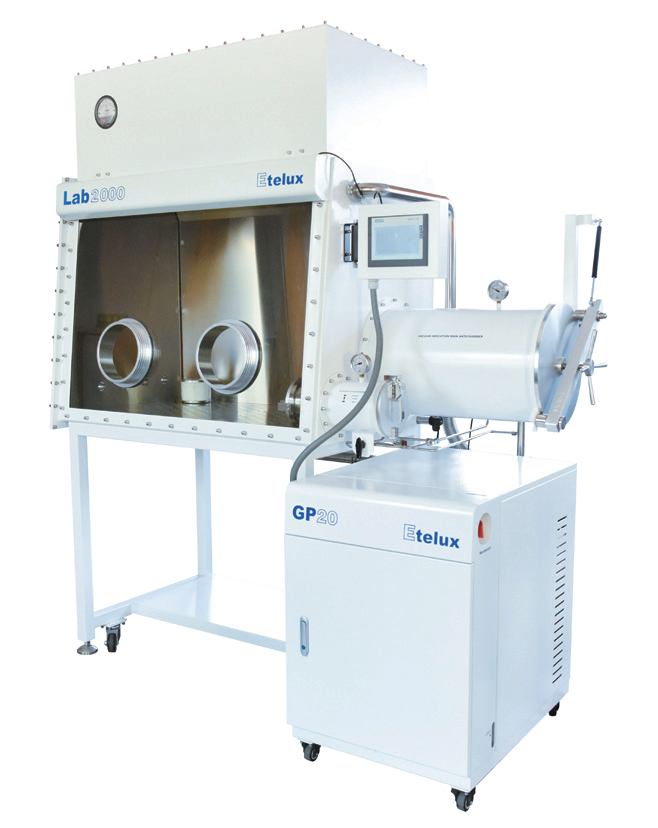
Core Features
- Working principle: “Maintenance‑focused” – real‑time removal of O₂/H₂O via closed‑loop purification.
- Atmosphere control: Stabilizes at O₂ < 1 ppm, H₂O < 1 ppm (high‑end models) with tight leak rates (≤0.001 vol%/h).
- Vacuum capability: Standard airlocks use vacuum for transfer; main chamber stays at slight positive pressure (no vacuum).
- Cost: Higher upfront cost (includes purification columns, sensors, PLC); low long‑term cost (minimal gas use, low power consumption).
Best For
- Daily, continuous use: 8–24/7 operation, frequent airlock use.
- Ultra‑high purity needs: Lithium‑ion battery assembly, perovskite solar cells, OLED material handling, or air‑sensitive chemical synthesis.
- Long‑term stability: Experiments requiring consistent O₂/H₂O levels for days/weeks.
- High‑value research: Trace contamination ruins results.
Vacuum vs. Purification Glove Box: Quick Comparison
| Feature | Vacuum Glove Box | Purification Glove Box |
|---|---|---|
| Primary Goal | Displace air via vacuum | Maintain ultra‑low O₂/H₂O long‑term |
| O₂/H₂O Levels | <100 ppm (temporary) | <1 ppm (stable, continuous) |
| Vacuum Operation | Supported (main chamber) | Airlock only; main chamber positive pressure |
| Gas Consumption | High (per cycle) | Low (regeneration only, ~once/year) |
| Upfront Cost | Lower | Higher |
| Long‑Term Cost | High (gas) | Low (electricity, minimal maintenance) |
| Ideal Use Frequency | Occasional | Daily/24/7 |
Common Misconceptions to Avoid
- “Vacuum boxes maintain low O₂/H₂O”: No—they only displace air temporarily. Levels spike after opening airlocks.
- “Purification boxes do vacuum”: Standard models don’t. Choose a purification box with vacuum airlock if needed.
- “Cheaper is better”: Vacuum boxes cost less upfront but drain budgets via gas. Purification boxes save money for daily use over 2–3 years.
How to Choose: 3 Key Questions
- Do you need vacuum in the main chamber?→ Yes → Vacuum glove box→ No → Proceed to Q2
- Do you need O₂/H₂O < 1 ppm, stable 24/7?→ Yes → Purification glove box→ No → Proceed to Q3
- How often will you use it?→ Occasional (≤3×/week) → Vacuum glove box→ Daily → Purification glove box
Final Verdict
- Choose a vacuum glove box if you need vacuum capability, use it occasionally, or have budget constraints for basic inert tasks.
- Choose a purification glove box if you demand ultra‑low, stable O₂/H₂O for daily/24/7 work on sensitive materials.
For labs needing both vacuum transfer and long‑term purity, opt for a purification glove box with heavy‑duty vacuum airlocks—the ultimate all‑in‑one solution.