
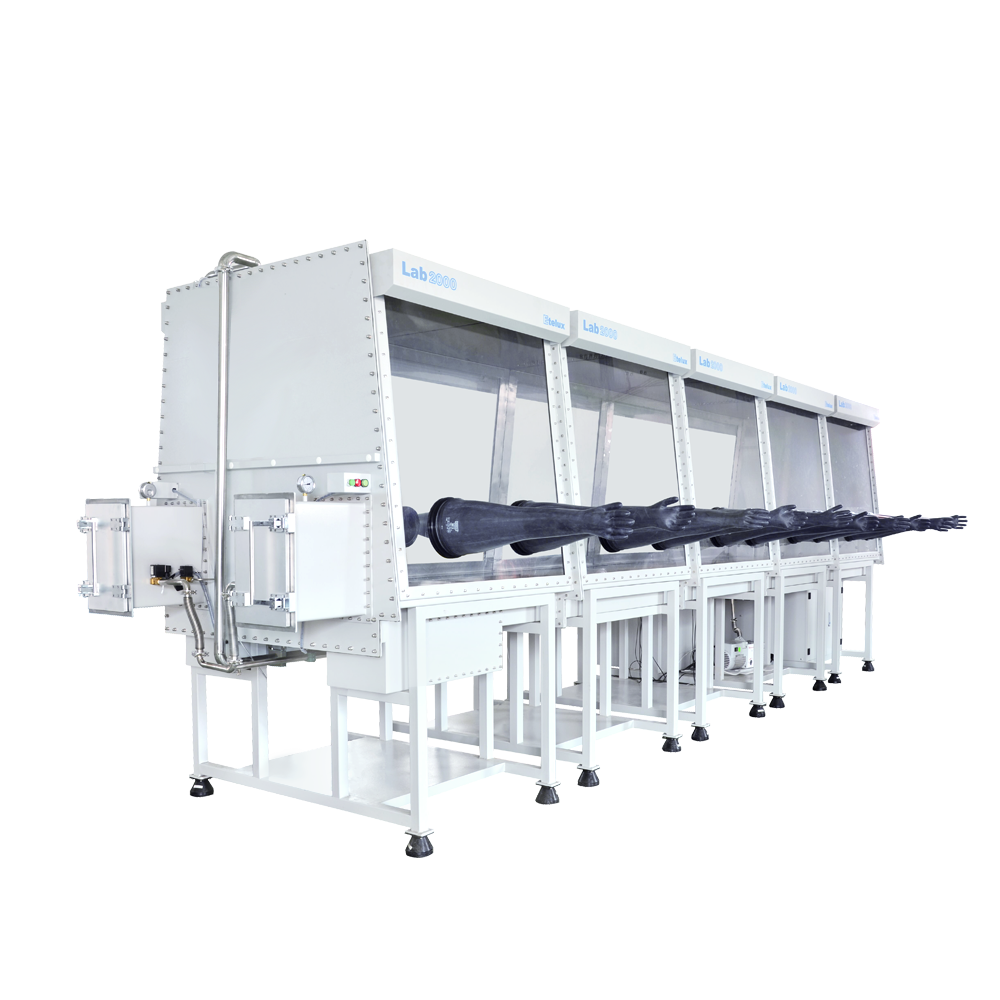
Vacuum glove boxes and vacuum coaters typically operate as standalone units for laboratory R&D, prototyping, and low-volume batch production. Manual independent control fully satisfies intermittent testing and small-scale sample fabrication requirements. However, for large-scale industrial thin-film manufacturing lines — including optical coating, semiconductor functional film deposition, and precision electronic coating systems — standalone equipment architecture creates major bottlenecks for automated workflow continuity, consistent process yield, and 24/7 unmanned production stability.
Modern vacuum coating manufacturing is rapidly advancing toward full-process automation, full-line system integration, and intelligent synchronized process control. Seamless coordination between vacuum glove boxes and coating hosts no longer depends on manual intervention, but on standardized industrial communication protocols, real-time synchronous logic control, and hierarchical safety interlock systems. For process engineers and procurement specialists managing large turnkey production projects, cross-equipment linkage and automation compatibility have become critical differentiators between entry-level standalone devices and premium industrial-grade integrated vacuum process solutions.
This article delivers in-depth, practical selection guidelines for vacuum glove box and vacuum coater linkage systems, covering industrial communication compatibility, synchronous automation logic, and full-line integration strategies. It serves as a technical reference for large-scale production line tendering, equipment procurement, and intelligent process upgrading for high-end thin-film manufacturing applications.
1. Industry Pain Point: The Limitations of Standalone Equipment in Large-Scale Production Lines
Conventional standard vacuum glove boxes feature closed-loop local control systems designed for independent operation. These basic units only support manual parameter adjustment, single independent pumping-purging cycles, and standalone atmosphere regulation, with no capability for real-time data exchange or synchronous response with external vacuum coating equipment. When paired with modern automated vacuum coating production lines, these structural limitations create three critical operational drawbacks for industrial-scale manufacturing.
First, manual operation causes unsynchronized production tact time. Manual transfer, evacuation, and gas replacement workflows cannot match the high-frequency, continuous cyclic operation of automated vacuum coaters, leading to equipment idle time and reduced overall line OEE (Overall Equipment Effectiveness). Second, isolated equipment architecture creates process data silos. Standalone glove box operational data cannot sync with coating process parameters, disabling full-lot quality traceability, data-driven process optimization, and centralized production management.
Most critically, asynchronous equipment logic introduces severe process and safety risks. Misaligned opening/closing timing between the glove box antechamber and coater vacuum chamber triggers atmosphere turbulence, cross-contamination between process zones, and vacuum system pressure impact. These issues directly result in thin-film unevenness, poor substrate adhesion, and inconsistent batch quality. For large automated production lines, these hidden yield losses and safety risks far outweigh the upfront cost savings of basic standalone glove box units.
2. Core Foundation of Linkage: Standard Industrial Communication Protocol Compatibility
Real-time data interconnection and stable communication compatibility between glove boxes and vacuum coaters is the fundamental prerequisite for reliable full-line automation integration. In large industrial automation projects, cross-device compatibility and expandability always take priority over isolated standalone performance parameters.
Industrial-grade integrated glove boxes are engineered with full support for mainstream industrial communication protocols, including Modbus RTU/TCP, TCP/IP, and PROFIBUS, alongside reserved standard industrial Ethernet and multi-channel IO signal interfaces. This hardware configuration enables stable, bidirectional real-time data interaction with vacuum coating hosts, factory PLC central control systems, and MES manufacturing execution systems.
Via standardized protocol docking, the integrated glove box actively uploads key operational data — including internal O₂/H₂O concentration, real-time vacuum pressure, purification system status, chamber door state, and fault alarm codes — to the coater and central control platform. Simultaneously, it automatically receives scheduling and process instructions from the host system, realizing unified data synchronization, real-time equipment status monitoring, and centralized production line management.
For smart factory and large turnkey industrial projects requiring long-term upgradability, custom OPC UA protocol integration is available. This advanced interface reserves full compatibility with industrial Internet architecture, supporting future intelligent factory upgrades and sustainable equipment function expansion.
3. Core Value of Automation: Synchronous Control Logic & Interlocking Safety Mechanism
Genuine full-line integration is not limited to simple signal connection. It relies onprocess-level synchronous workflow logic and dual-layer safety interlock protection — the core technical advantage that distinguishes industrial integrated glove boxes from ordinary laboratory-grade equipment.
3.1 Process Synchronization: Beat Matching of Transfer and Coating Cycles
The automated linkage system achieves fully synchronized closed-loop operation between glove box material handling workflows and vacuum coating cyclic processes. Aligned with the coater’s production tact time, the glove box automatically completes pre-evacuation, multi-cycle inert gas purging, and atmosphere stabilization to standby status. Upon completion of each coating cycle, the system triggers precise antechamber docking and automatic substrate loading/unloading, eliminating manual operation entirely.
This closed-loop automatic control architecture eliminates human-induced tact time deviations, ensures consistent batch-to-batch production rhythm, and maximizes the uptime and operational efficiency of high-value vacuum coating equipment. It serves as a core optimization solution for improving overall production capacity and stable yield in large-scale thin-film manufacturing lines.
3.2 Safety Interlocking: Zero-Risk Isolation of Vacuum and Atmosphere
Vacuum coating processes demand ultra-rigorous vacuum isolation and inert atmosphere stability. Industrial linkage systems adopt hardware + software dual safety interlock architecture, fundamentally preventing equipment misoperation, atmosphere cross-contamination, and process failure risks in automated production.
Custom interlock logic ensures absolute operational safety: the coater vacuum chamber remains locked if the glove box antechamber is misaligned or fails vacuum qualification; the antechamber atmospheric door is prohibited from opening during the coater’s high-vacuum working phase. Additionally, any abnormal fluctuations in glove box O₂/H₂O levels, vacuum failure, or system alarms will trigger an automatic coater pause protection sequence, effectively preventing mass defective batches caused by abnormal process atmospheres.
4. Procurement & Engineering Selection Standards for Large-Scale Production Lines
For large vacuum coating turnkey projects and intelligent production line retrofits, equipment selection must transcend static indicators such as leak rate and gas purity. Decision-makers should prioritize three core industrial-grade capabilities: cross-system integration compatibility, automation scalability, and long-term linkage operational stability.
First, select multi-protocol industrial control systems. Equip glove boxes with complete industrial communication interfaces to achieve plug-and-play docking with mainstream vacuum coaters and factory central control platforms, avoiding costly secondary hardware and software retrofits.
Second, deploy process-customized linkage logic. Optical coating, semiconductor deposition, and functional film coating processes feature unique cycle rhythms and safety thresholds. Professional customizable synchronous control programs and interlock parameter settings ensure full alignment with specific project process requirements.
Third, reserve intelligent data management functions. Industrial integrated glove boxes support cloud data uploading, real-time remote monitoring, and fault pre-warning. These functions seamlessly connect with MES systems for automated data statistics, remote production status review, and equipment predictive maintenance, matching modern smart factory operation modes.
5. Conclusion: Intelligent Integration Defines High-End Industrial Manufacturing Standards
In today’s homogenized vacuum equipment market, basic static process parameters have become standard industry configurations. The core technical competitiveness of high-end vacuum glove box solutions lies in full-line integration performance and intelligent automation control capability for industrial production scenarios.
For large-scale industrial coating projects, standalone equipment only meets basic low-efficiency production demands. In contrast, integrated linkage solutions optimize production tact time, stabilize batch yield, reduce manual operational risks, and enable full-process data traceability and intelligent management. It is the optimal solution for medium and large thin-film manufacturers to upgrade production lines and enhance comprehensive manufacturing profitability.
Our industrial vacuum glove box lineup supports full industrial protocol docking, process-customized linkage control logic, and turnkey full-line integration solutions. We empower global thin-film and semiconductor manufacturers to achieve unmanned, high-efficiency, and intelligent upgrading of vacuum coating production lines.
#VacuumGloveBox #VacuumCoating #FullLineIntegration #IndustrialAutomation #ProcessControl #SmartFactory #SemiconductorManufacturing #OpticalCoating #PLCSystem #MESIntegration #VacuumProcessAutomation