
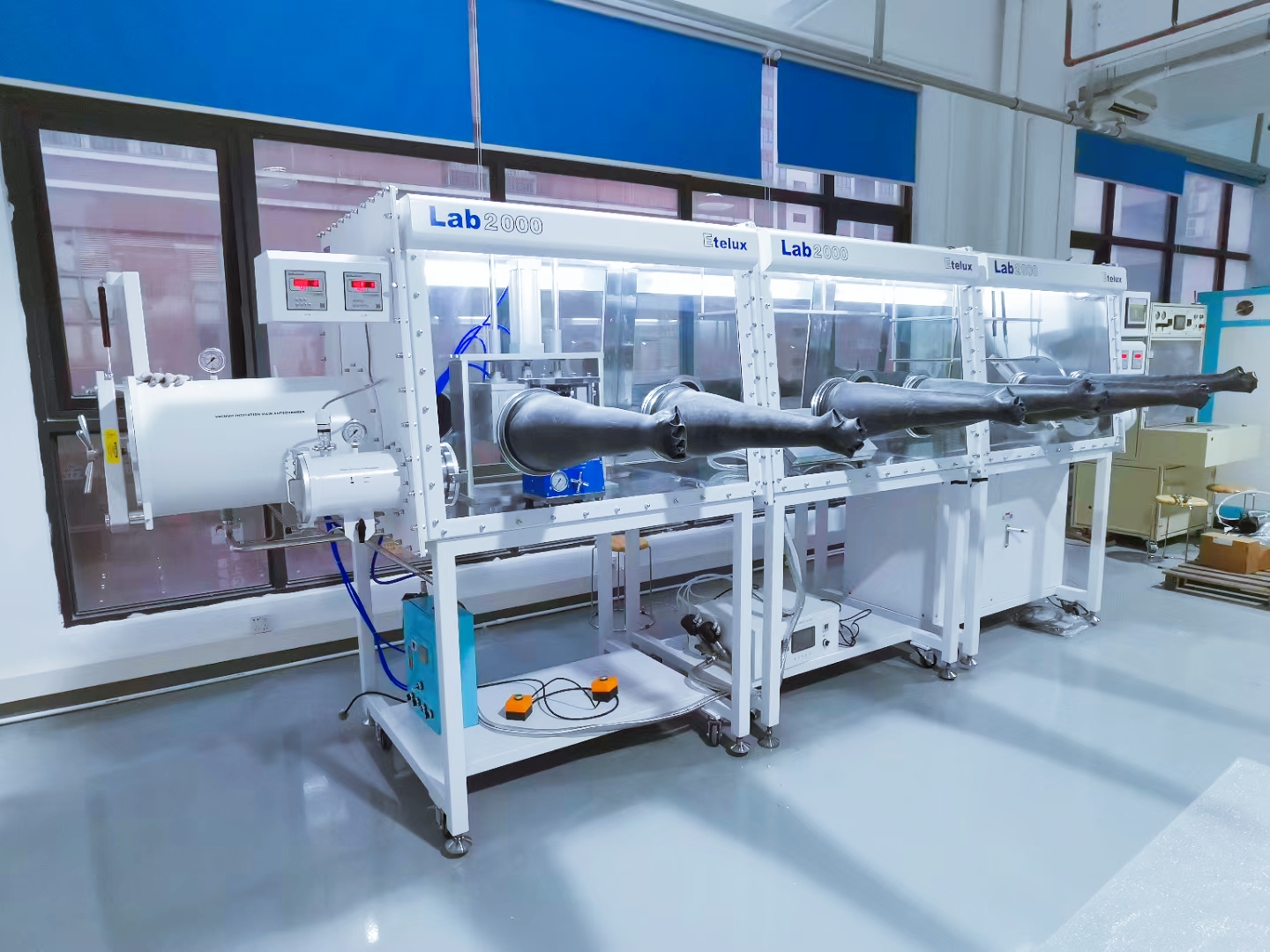
In the vacuum coating industry, most engineers and procurement teams follow the same selection logic: the lower the water and oxygen PPM value, the better the glove box for coating processes.
This is the most prevalent and misleading misconception in the industry.
An ultra-low PPM reading only represents a device’sstatic ideal performance. It cannot reflect real-world dynamic working conditions in vacuum coating production. Many factories purchase high-end 0.1 PPM glove boxes yet still face coating color deviation, film peeling, batch yield fluctuation, and abnormal target oxidation. The root cause is simple: relying solely on single static parameters ignores actual coating process adaptability.
Vacuum coating technologies including PVD, CVD, ALD and magnetron sputtering are dynamic, high-precision continuous processes, completely different from static inert storage environments for battery or material research. As core supporting equipment for sample pre-treatment, transfer and chamber docking, glove boxes determine final coating quality through process compatibility, systematic stability and structural matching — rather than simple water and oxygen indicators.
This article breaks down common industry misunderstandings and establishes a professional, process-oriented glove box selection system for vacuum coating scenarios, helping technicians avoid parameter traps, reduce trial-and-error costs, and secure long-term process stability.
1. Why Pure PPM Index Fails for Vacuum Coating Processes
It is critical to distinguish one core concept: instant static PPM ≠ continuous process stability.
Most low-PPM glove box parameters are tested under ideal static conditions: no load, constant temperature, no manual operation, and no chamber docking. Actual vacuum coating workflows involve constant dynamic disturbances that break internal atmosphere balance:
- Frequent coating chamber opening and docking causes intermittent pressure fluctuation
- Residual heat from high-temperature coating triggers internal airflow disturbance and moisture penetration
- Repeated process gas replacement and pumping disrupts stable pressure balance
- High-frequency sample access continuously introduces tiny external contaminants
This explains the common production phenomenon: a glove box rated 0.1 PPM statically may fluctuate between 1–3 PPM during actual coating operation. Static parameter comparison is therefore meaningless for real production evaluation.
Furthermore, vacuum coating defects are not limited to oxidation and moisture damage. Film uniformity, adhesion strength, particle contamination, process gas purity and chamber cleanliness jointly determine coating quality — none of which can be reflected by water and oxygen PPM values.
2. Four Core Process Dimensions That Determine Glove Box Suitability
Beyond parameter comparison, vacuum coating glove box selection must follow the principle: process priority, parameter auxiliary. The following four dimensions are essential for stabilizing coating yield and eliminating process failures.
2.1 System Leak Rate: The Bottom Line of Long-Term Stability
For vacuum coating lines, system leak rate is far more critical than PPM readings.
Water and oxygen levels can be temporarily reduced by frequent purification and gas exchange. However, tiny leaks in weld seams, viewing windows, glove ports and antechambers cause irreversible, continuous external air infiltration. This leads to coating pinholes, reduced light transmittance, poor film adhesion and inconsistent batch color for high-end optical and semiconductor coatings.
Many low-cost devices rely on excessive gas circulation to “force down” PPM values. Although the static data looks qualified, excessive hidden leaks lead to gradual atmosphere degradation, unstable production and high long-term maintenance costs.
Coating Selection Rule: Verify static and dynamic operating leak rates first, then refer to PPM data to avoid “high-leakage fake low-PPM” equipment.
2.2 Dynamic Purification Response: Adapt to High-Frequency Operation
Battery and material labs feature low operation frequency and stable atmosphere, requiring minimal purification response performance. In contrast, vacuum coating is a high-frequency intermittent process where every sample transfer and chamber docking instantly raises water and oxygen levels.
Slow purification regeneration, insufficient circulation efficiency and poor dynamic recovery will keep the chamber in a long-term超标 state, directly damaging pending or freshly coated samples.
High-end coating-specific glove boxes do not excel only in static ultra-low parameters. Their core advantage lies in fast atmosphere recovery and stable pressure control after each operation, locking the process window and eliminating dynamic fluctuation risks.
2.3 Structural Compatibility with Coating Equipment
PVD, CVD, ALD and magnetron sputtering systems require completely different glove box docking methods, antechamber sizes, vacuum matching levels and internal airflow designs.
Blindly purchasing general low-PPM glove boxes often causes serious adaptation issues:
- Mismatched vacuum degree between antechamber and coating chamber leads to air contamination during sample transfer
- Disordered internal airflow generates micro-particles and coating blemishes
- Incompatible interfaces prevent seamless docking and increase leakage risks
- Insufficient pressure and temperature resistance cannot handle residual heat from high-temperature coating
The correct selection logic is clear: confirm coating process and equipment specifications first, then customize glove box structure, vacuum system and airflow solution, rather than pursuing extreme static parameters blindly.
2.4 Material Outgassing & Cleanliness: Eliminate Hidden Film Contamination
High-precision vacuum coating (optical coating, semiconductor thin film, functional film deposition) demands extremely low material outgassing and ultra-high cleanliness.
Many low-cost glove boxes adopt ordinary plates, low-grade sealants and non-standard accessories. Long-term operation releases invisible organic residues and micro-impurities that do not affect PPM readings but cause film crystallization defects, surface haze and degraded electrical performance — hidden killers of high-end coating quality.
Coating-dedicated glove boxes adopt low-outgassing stainless steel, full-seam welding and ultra-clean configuration to eliminate hidden contamination and ensure high film purity and uniformity.
3. Standard Selection Logic: Process First, Parameter Second
Based on full vacuum coating working conditions, we summarize a professional selection priority for engineers and procurement decision-makers:
Process Adaptability > System Leak Rate > Dynamic Purification Stability > Chamber Cleanliness > Static Water/Oxygen PPM
In short: PPM value is the qualification threshold; process matching determines production yield ceiling.
For standard coating processes, a stable 1 PPM glove box with qualified leak rate and structural compatibility fully meets mass production requirements. For high-end scenarios such as ALD and semiconductor precision coating, ultra-low PPM is only one basic requirement — the process needs a complete solution with dynamic stabilization, ultra-low outgassing, high cleanliness and seamless equipment docking.
Extreme parameters without process matching only cause unnecessary cost waste. Process-oriented customization delivers stable mass production and lower long-term maintenance costs.
4. Conclusion: Abandon Parameter Involution, Focus on Process Essence
The biggest glove box selection misunderstanding in the vacuum coating industry is equating static parameters with actual dynamic process capability.
Water and oxygen PPM is merely a basic qualification standard. A truly reliable vacuum coating glove box must balance low leakage, dynamic purification performance, structural compatibility, ultra-low outgassing and long-term stability to adapt to PVD, CVD, ALD, magnetron sputtering and other precision coating processes.
Abandon blind parameter comparison and return to process-oriented selection. This fundamentally solves common coating defects including color deviation, film peeling, particle pollution and batch fluctuation, realizing stable yield improvement and production cost reduction.
Professional Custom Vacuum Coating Glove Box Solutions
We specialize in vacuum coating supporting equipment, providing customized glove box system solutions for PVD, CVD, ALD, optical coating and semiconductor thin-film processes. We prioritize process adaptability over parameter stacking, optimizing low-leakage structure, dynamic purification performance, ultra-clean design and equipment docking compatibility to ensure long-term stable and consistent coating quality. Contact our technical team for professional process evaluation and equipment selection consultation.